

I grew up in a church that was an offshoot of the Seventh Day Adventist movement. In the 1930s a group of Black Seventh Day Adventist leaders in Harlem split from the denomination over racial discrimination. My paternal grandfather was part of that split. Much like Bishop Richard Allen in Philadelphia more than a century earlier, their departure from the larger denomination produced a new organization that held to the same basic doctrine.
So the Seventh-day Christian denomination was born with the same foundational practices and beliefs as the Seventh Day Adventists. Chief among those practices was the observance of Saturday as the Sabbath, the Lord’s Day, the Day of Rest, considered the primary command found in the Ten Commandments. My family was strictly Sabbatarian. From sunset Friday to sunset Saturday we engaged in no secular activities and no secular conversations. We listened to religious music. We watched no television. We did no shopping. We opened no mail. We did no household chores. We kept the Sabbath day holy as commanded.
Jesus taught that if his disciples loved him they would keep his commandments. We were taught that those who did not keep the seventh day Sabbath would not enter heaven, since heaven was described as a place occupied by people who had kept the commandments. And the commandment that most Christians violated was the fourth.
This was not a challenge for me until I became a teenager. Before then there was not much else to do on the Sabbath anyway. Little league was a bit of a problem because we played games on Wednesday and Saturday. But my dad worked out a deal with the coach. I would be on the team but play on Wednesdays and not on Saturdays. So that is what I did. I played the Wednesday games and prayed for rain on Saturdays so I could play the rain date. One year it rained every Saturday but one. God was on my side!
When I got to high school the stakes were much greater. I was passionate about baseball and basketball, and I played well enough to be a starter in both sports. Our baseball team played on Saturdays. Our basketball team played on Friday nights. Both fell inside the Sabbath, which began at sunset on Friday. If I was going to play either sport, the schedule collided with our commitment to Sabbath observance.
Much to my surprise, dad gave me the decision to make. Play or do not play. He concluded that I had been baptized and that my relationship with God was mine to manage. So I decided to play both sports, all the while hoping and praying that God would not strike me dead in the middle of a game on the Sabbath. This was a major development in my life and in my relationship with my father. He had been such a strict parent that I could not believe he allowed me to keep living in his house while breaking one of our cardinal rules.
One Friday night I was in a game at the school, and I looked up into the stands and there sat my dad. The Sabbath had already begun. The sun had gone down, and by everything he had ever taught me, he should have been home. I knew he loved basketball. He had played himself in the Army. But I could not comprehend that this strict, non-negotiable, Sabbath-keeping pastor would walk into a gymnasium on the Sabbath to watch his son play ball.
What became clear to me that night, and stayed with me for the rest of my life, was that my father would not let a religious practice or a doctrinal distinctive override his love and support for his son. He did not just come to a ballgame. He came during the Sabbath, the very day he had ordered his whole life around. I knew my dad well enough to know what it cost him to walk into that gym on that Friday night. That one night also defined how I would behave as a father.
As large as our church became, and despite the many positions I have held, I have tried to be the kind of father my father taught me to be by making my sons my priority. I missed many programs, a few funerals, and even some Sunday morning services to be at events with my sons. Often they were playing basketball. But I never missed a back to school night or parent/teacher conference either. I visited their schools so often that they stopped making me stop at security for a visitor’s pass. Sometimes I was there because of something one of them had done. More often I was there to hold the teachers accountable to a standard of instructional excellence that my sons deserved. I was in those buildings so often that their friends would ask them to have me come meet with their teachers too.
I remember a woman who asked me to go with her son to meet his teachers because of problems he was having. When I told her what time I would be there, she said she could not come. She had to go to church. I told her that it was shameful that she put a church service above her son’s education.
For years I told our church leaders the same thing. If your role in the church keeps you so busy that you have no time for your children, resign the position and give that time to them. There is no greater contradiction than a church leader, especially a pastor, too busy at the church to raise and support his or her own children. I learned that one Friday night from my dad.
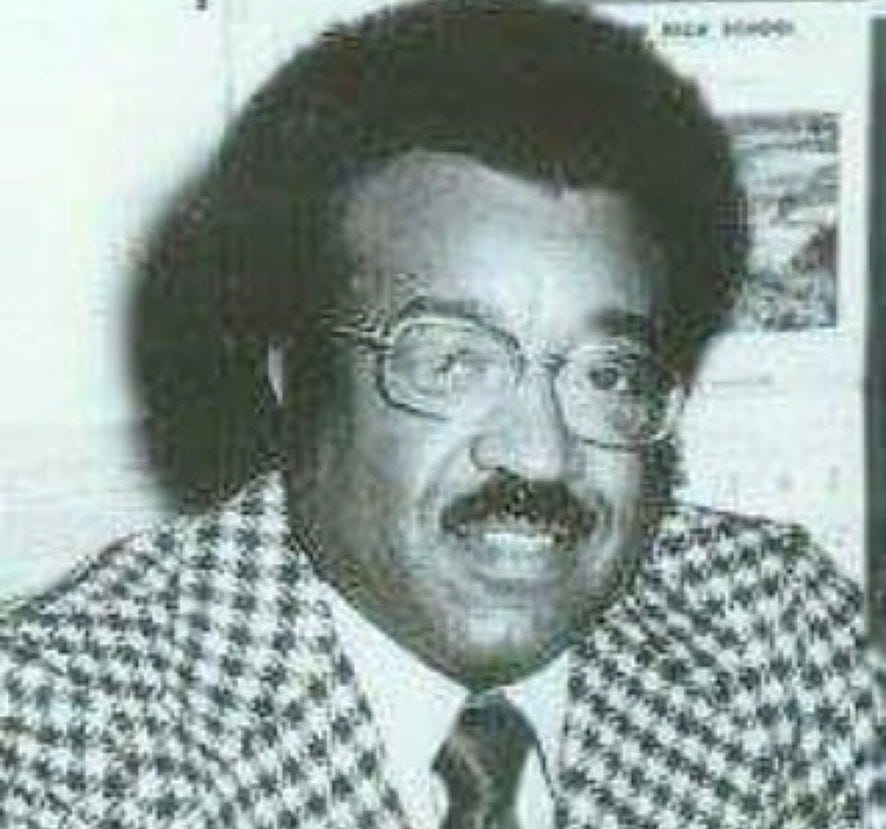
DeForest B. Soaries, Sr.
Your commitment to attending your son’s activities was of great encouragement to those of us trying to raise our children. I recall getting criticized by men who told me that I was trying to live through my sons - whatever that meant. There is something special about having your father there for you. Why would I deprive my boys of that. Why would I cheat myself out of those moments. Thanks Pastor!
Buster,
Awesome story! Thanks for sharing. I remember your Father and Mother. I also remember his church in Montclair.
May they both Rest In Peace with The Ancestors.
Peace,
J. Hatim Hamer (Joey)